
I have heard the above statement thrice thus far, most recently from a relative who retorted that Cypriot culture is (allegedly) non-existent (cue eye roll).
Despite such an absurd baseless statement, there is a plethora of archaeological evidence that suggests Cyprus has been continually inhabited since as early as the 9th millenium BC. The main reference point for this was the discovery of Khirokitia, a Neolithic age site, revealing a settlement (comprising circular buildings with white facades) which included fortifications; it has since been listed as one of the island’s three UNESCO World Heritage sites.
In the centuries to come, Cyprus’ strategic location between three continents led to many foreign colonisations: Mycenaean*, Phoenician, Persian, Hellenistic, Roman, Egyptian (Mark Antony gifted the island to Cleopatra as a token of gratitude for her loyalty to Rome), Byzantine, Lusignan, Venetian, Arab, Ottoman, and British to name but a few. It is this tapestry of multi-ethnic influences that has made the culture of the Megalonissos** (aka Cyprus) so rich.
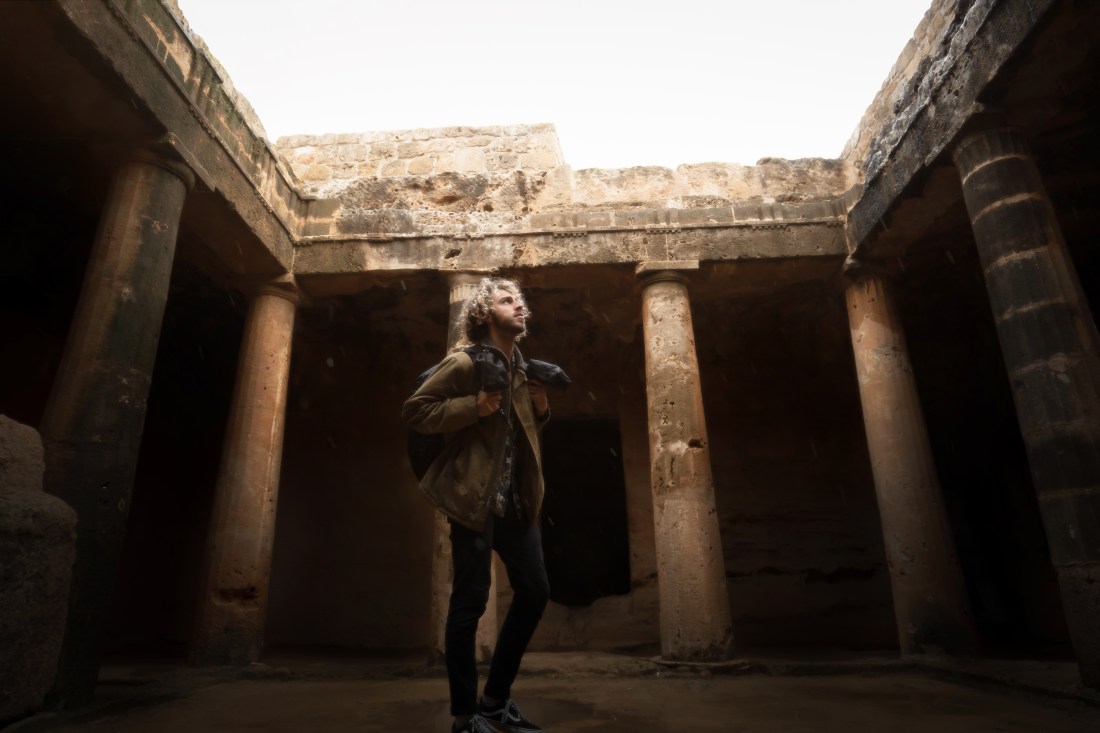
Indeed, Cypriot architecture has been immensely impacted by these various civilisations. One only needs to consider the exquisite Roman mosaics in Paphos, the Hala Sultan Tekke mosque in Larnaca (said to be the fourth most important mosque outside of Mecca, Medina and Jerusalem), the ancient Greek theatre of Kourion, the Hellenistic Tombs of the Kings (pictured) and the many Byzantine monasteries in the Troodos mountain range with their beautiful iconography and frescoes, to see the wealth and diversity of building styles that have been adopted on the island over the centuries. Further, the Venetian walls of Nicosia with their 12 bastions, forming their iconic 12-start formation; the well-preserved ancient Greek city of Salamis, the beautiful Bellapais monastery near Kyrenia built by the Catholic rulers of the island in the 13th century, and of course the Byzantine fortress of St Hilarion (widely rumoured to have inspired the castle in Disney’s logo).
The Metropolitan Museum in New York would also staunchly testify in favour of Cyprus’ cultural prowess – after all, the Cesnola collection was the main set of exhibited works when the museum first opened in 1880, a big part of which is formed by ancient Cypriot objects. The collection was initially sought for the Louvre by Napoleon III, as well as the State Hermitage Museum in Saint Petersburg before settling in New York. (Metropolitan Museum website) It is noted that the Museum’s acquisition of the Cesnola artefacts prompted the French and British to commission archaeological expeditions in Cyprus.
Cyprus features heavily in Greek mythology; the most famous tale of which involved the goddess of beauty Aphrodite, who was believed to have been born of the foamy waves off the city of Paphos. To this day, even in non-pagan times, Cyprus is known as the island of Aphrodite or Venus. Another famous legend associated with Cyprus deals with the adventures of Byzantine hero Digenis Akritas. It is said that he once threw a rock across Cyprus, attacking oncoming Saracen ships – the rock landed in Paphos at the site of the birthplace of Aphrodite, and it is known as Petra Tou Romiou or “Rock of the Greek”.
One of the most famous moments in the island’s history was when during the Crusades, Richard the Lionheart (who temporarily controlled the island) wed his wife Berengaria in Limassol, later selling Cyprus to the Knights Templar. Indeed, let us also not forget that the majority of Shakespeare’s Othello is set on the island, in the eastern city of Famagusta. In terms of domestic works, Greek-Cypriot “tsiattista” and the equivalent “mani” in Turkish-Cypriot, are endemic to the island (rhyming poetry, often sung at weddings and other celebrations). As for dances, there are many bi-communal similarities with zeimbekiko, tsifteteli and sousta enjoyed by all Cypriots.
When referring to the gastronomic character of the island, Commandaria (a sweet dessert wine) is widely held to be the oldest named wine on the planet, dating back to 800 BC. Geography has greatly influenced food on the island, mainly the Levant, and the general eastern Mediterranean region. What’s more, production of the infamously popular halloumi cheese cannot keep up with international demand. (The Guardian, 11 November 2018 and 24 November 2019) Other local delicacies include sucuk (a sweet made from thickened grape juice with nuts), and on the savoury side, hiromeri (smoked and aged pork). (Brittanica)
Cyprus has culture in spades, history for millenia, tales for days and traditions/customs to be revered: just ask Shakespeare, Richard the Lionheart or Cleopatra.
N.B.
*The Mycenaean settlers on the island was arguably the most impactful, with the Cypriot dialect to this day remaining the closest form of any Hellenic dialect to Ancient Greek.
**Cyprus is known as the Megalonissos in Greek, as it is the biggest Greek-speaking island both in terms of size and population. In antiquity, the island was known for its vast quantities of copper, which it exported to many corners of the Mediterranean (in fact, the word copper comes from the Greek word for the island Kypros). It is said that Cypriot smiths produced some of the finest bronzework in the eastern Mediterranean, and many moved to foreign lands in order to export and hone their craft.

 The Constant Times